Área de Escucha
A sound archive of five municipalities of Antioquia for the Museo de Arte Moderno de Medellín, with a public sound map and a studio where participants record and publish.
- role
- editorial coordination and web platform
- location
- Barbosa, Caldas, Girardota, Jericó and La Estrella, Antioquia
- context
- Museo de Arte Moderno de Medellín (MAMM), Museo de Antropología y Artes de Jericó (MAJA), Área Metropolitana del Valle de Aburrá
- links
- areadeescucha.org / Sound map / Bitácora
Área de Escucha is a research-creation project of the Museo de Arte Moderno de Medellín (MAMM) that listens to five municipalities of Antioquia together with the people who live in them: Barbosa, Caldas, Girardota and La Estrella in the Aburrá Valley, and Jericó in the Southwest. Its artistic and curatorial direction is by Jorge Bejarano Barco. eme coordinated the editorial process and built the whole web platform, from the public archive and the sound map to the studio where participants record, edit and publish their own material. By November 2026 the archive held 139 recordings.
Listening as heritage
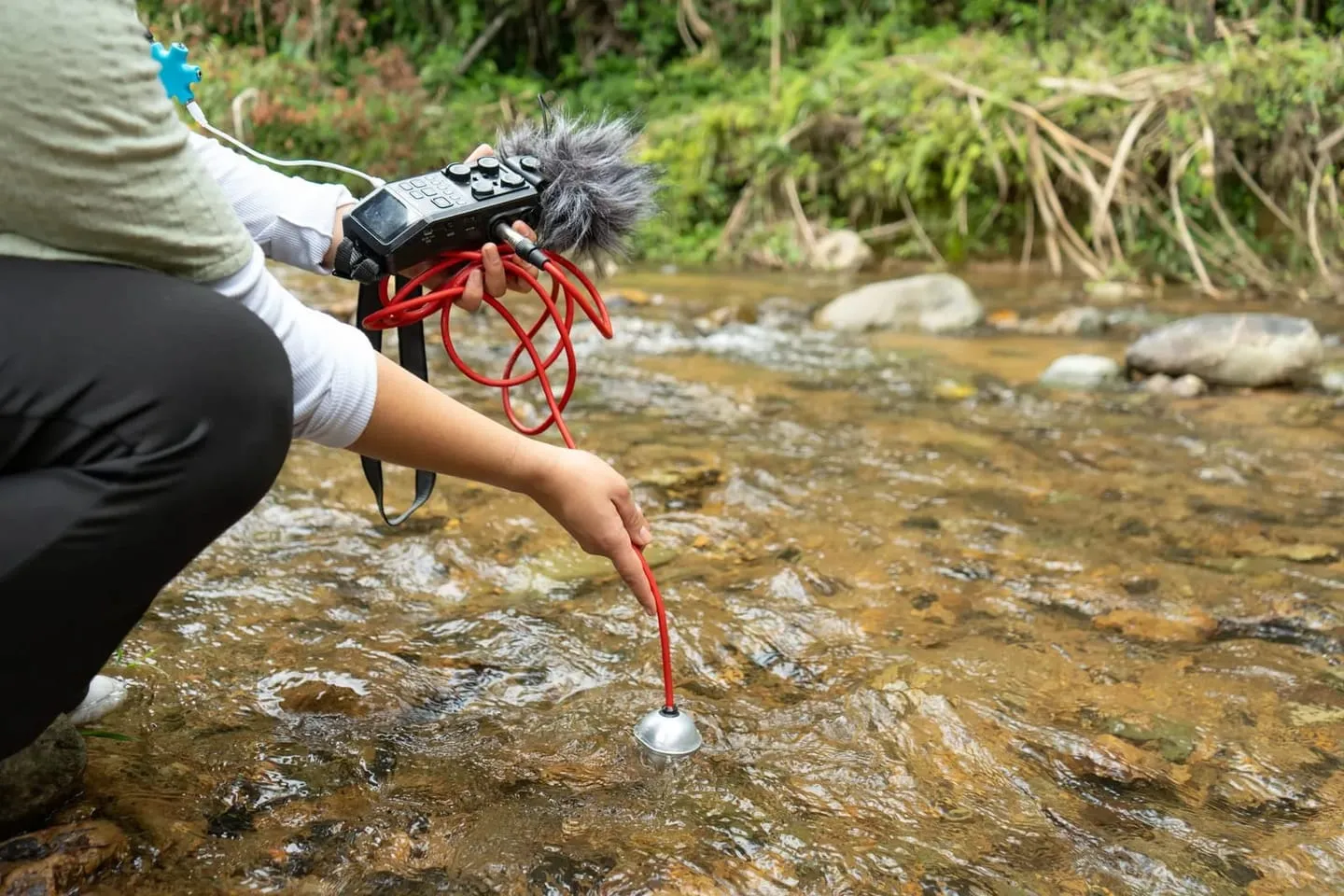
The project starts from an idea R. Murray Schafer put forward in the late 1960s: the sounds around us, birdsong, streams, trades, festivals and engines, are a cultural and natural heritage worth documenting. None of the Valley municipalities had an archive of that heritage, or local training in listening, acoustic documentation or citizen science applied to biodiversity. In each of them the process combined four moments: a sound art laboratory of six sessions and three field practices, from deep listening to bioacoustics, mapping and podcasting; a stage of research-creation in which participants edited their own material; a meeting at the MAMM to hear the Valley as one territory; and a community meeting where the recordings were handed to local institutions. The Área Metropolitana del Valle de Aburrá supported the work in the Valley, and in Jericó the project ran with the Museo de Antropología y Artes de Jericó (MAJA).
Archive and sound map
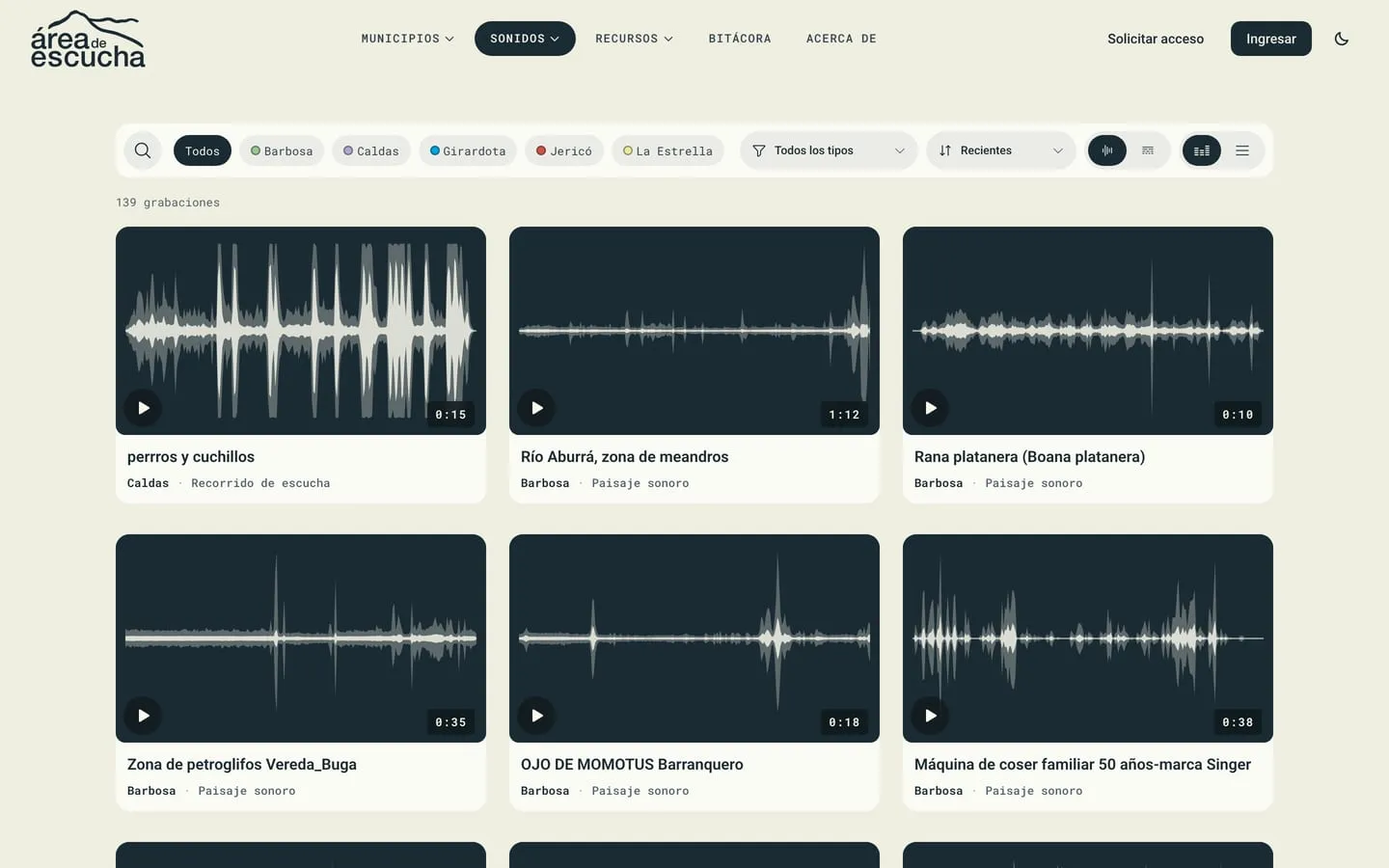
The archive is the public face of that work. Each recording keeps its municipality, type, acoustic environment, equipment, participants and tags, along with two decisions recorded apart: whether the voices heard in it have given consent, and whether it may be downloaded. Listeners can filter by municipality and type and switch between waveforms and spectrograms. By November 2026 Barbosa had 39 recordings, Caldas 29, Girardota 25, Jericó 24 and La Estrella 22, from a fifty-year-old sewing machine to the Boana platanera tree frog and the Aburrá River where it meanders.
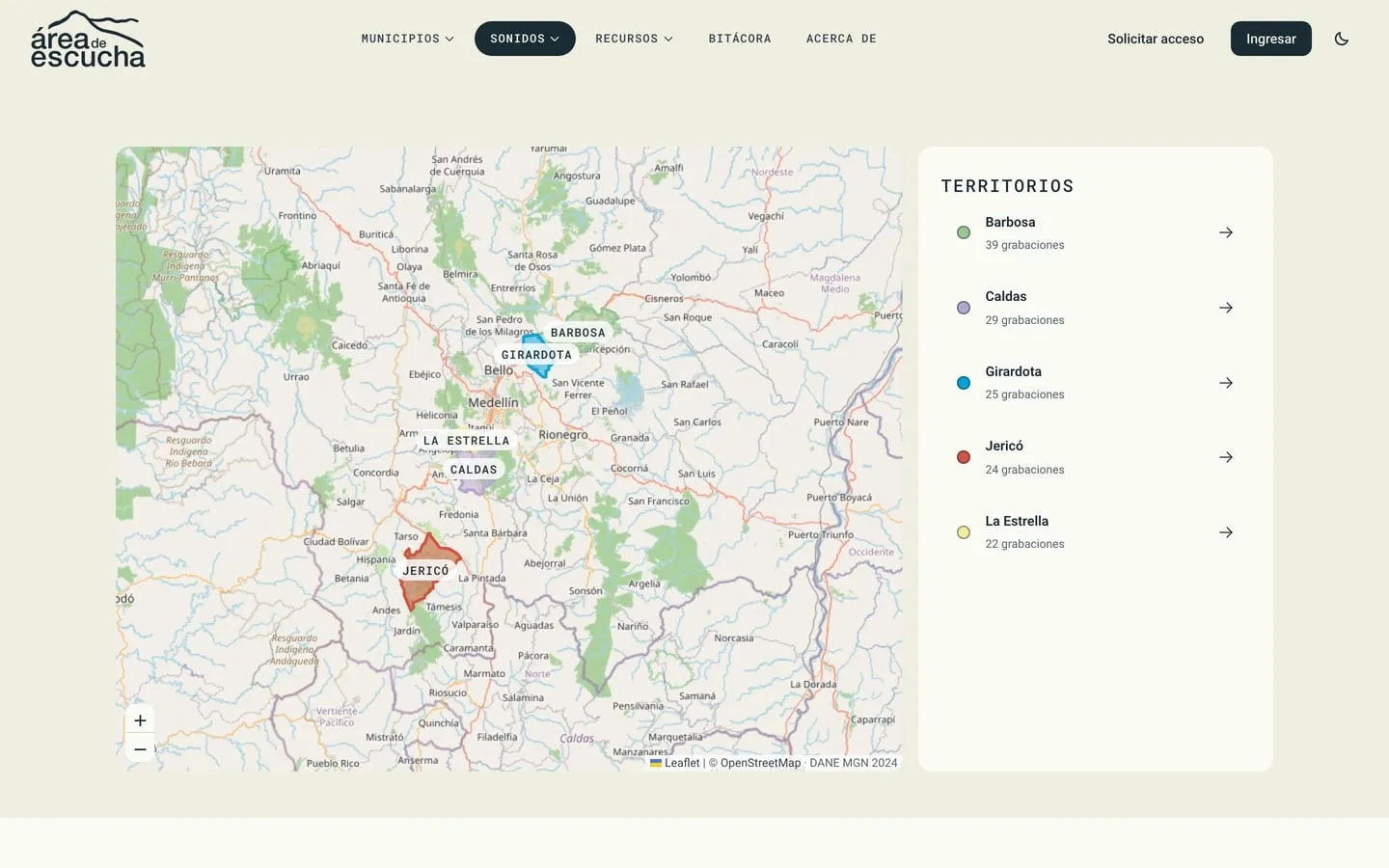
The sound map places the recordings on the territory. Each municipality is drawn with its boundary and listed with its number of recordings, so the archive can also be walked as a map of the region.
Editorial process
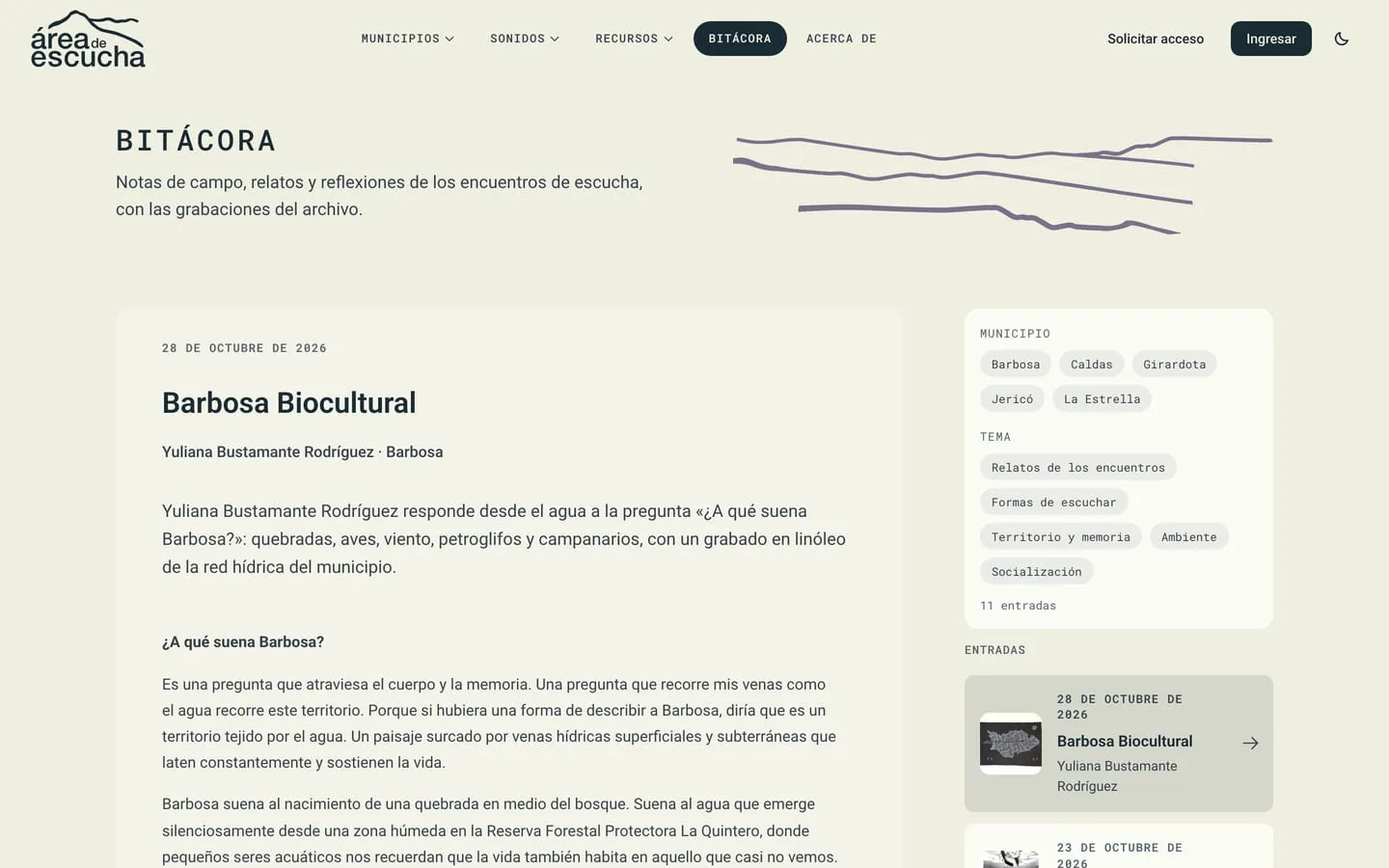
Coordinating the editorial process meant turning months of workshops into material that could be read, heard and reused. The Bitácora gathers field notes, accounts and reflections from the listening sessions, eleven entries by November 2026, most of them written by participants and published as they wrote them, with their drawings, prints and photographs. Around them sit a glossary of 54 terms, from acousmatics to acoustemology, 23 listening exercises, among them a sound walk, an extremely slow walk and listening in three layers, and a guide to tools for listening, recording, editing, analysing and reading. The record sheets and the archive’s categories came out of the same systematization of the material.
The Studio and the recorder
Behind the public site is the Studio, open by invitation, where participants and the team upload, describe, place and publish their recordings. A record starts private and is published when it is ready, with its listening notes, photographs and a point on the map. In November 2026 a field recorder joined it. It records from the phone’s microphone or an external one to WAV at 44.1 or 48 kHz with the system’s processing turned off, shows levels, a live spectrogram and the noise floor, keeps markers with notes, and works offline once installed. Takes travel to the Studio as lossless FLAC, encoded by the site itself because browsers do not, and a calibrated mode reports Leq, maximum and L90 in dB(A). On each take, BirdNET can suggest the birds heard, with times and confidence, keeping only the species expected at that place and week, for the participant to confirm by ear.
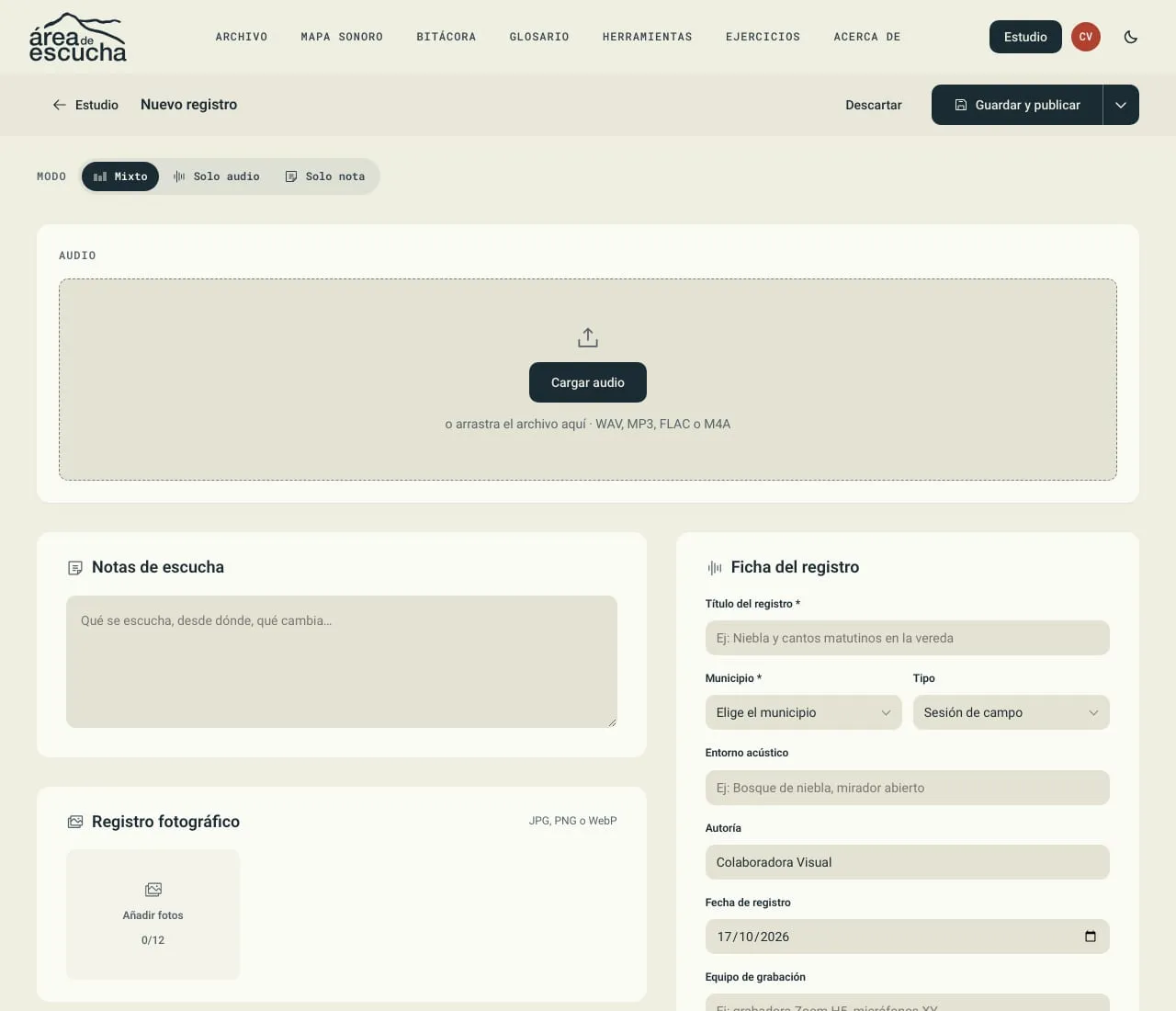
The public site and the Studio are one React application served by a Cloudflare Worker, with D1 for data and R2 for audio and photographs. Accounts are by invitation and sign in with a six-digit code sent by email, with no password. The platform went from its first commit in August 2026 to version 1.14 in November, with every change recorded release by release.
What the project leaves is not only an archive. In each territory the participants it trained form a group able to keep documenting after it closes, and a methodological booklet lets other municipalities of the region repeat the process. Área de Escucha is listed among the commissioned work of Sonic Field Labs.