Sonic Field
A platform for writing and research about sound and listening, with a lab that builds tools for machine listening.
- role
- co-founder, director, editor-in-chief
- location
- Medellín
- links
- sonicfield.org / Sonic Field Labs / listening.md
Sonic Field is an independent platform for writing and research about sound and listening, edited from Medellín. eme co-founded it in 2013 and directs it today. It publishes news, reviews, interviews and essays, keeps public indexes of books, tools and concepts, and runs a lab that builds software for listening. Its subject is how people and machines listen, and what that listening does to culture.
Editorial practice
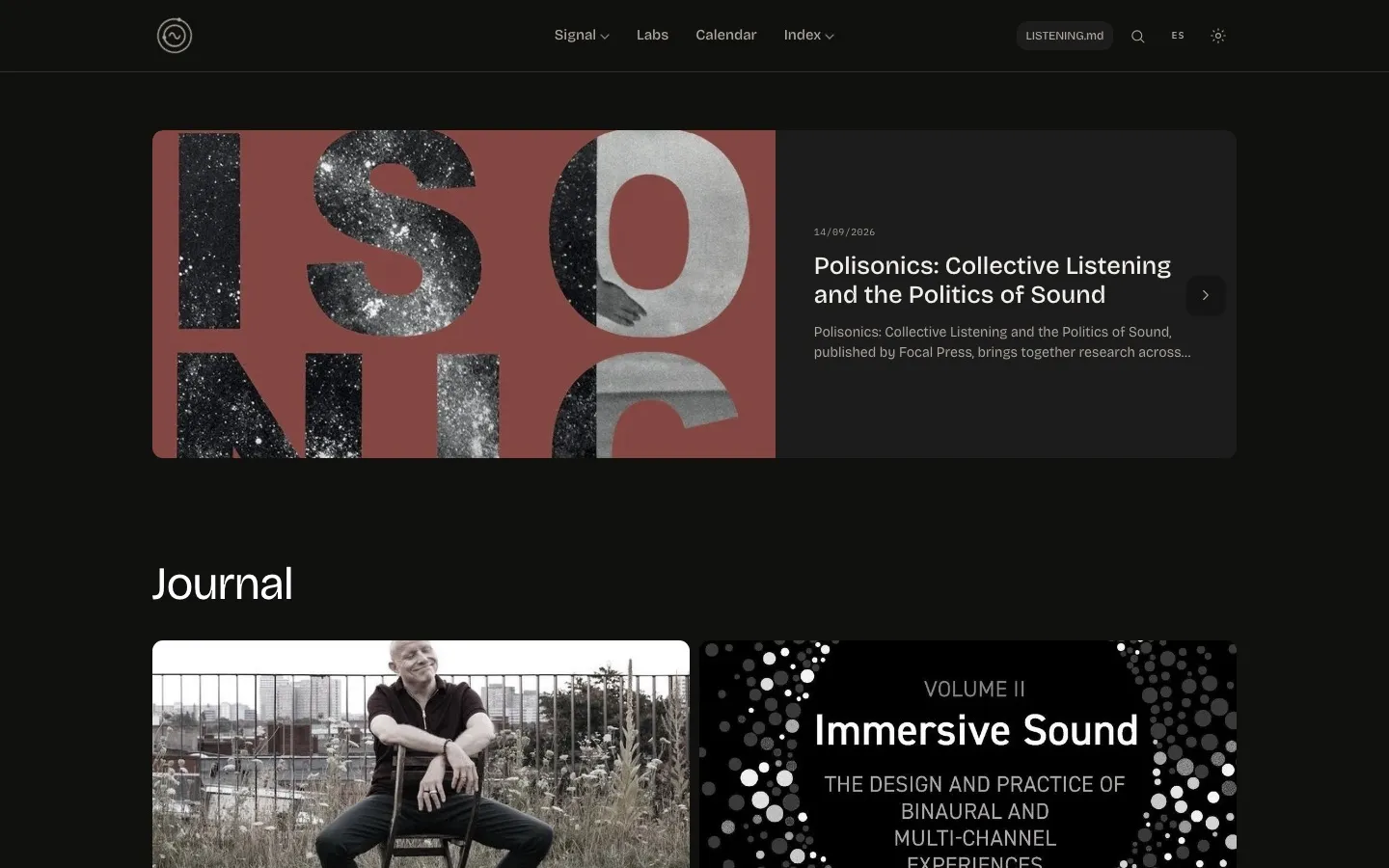
The Journal follows sound wherever it turns up, in news, academic research and audio technology alike, so a book on collective listening and politics can sit beside a new open generative audio model on the same page. For most of its life the site ran on WordPress. When it left WordPress in 2026, the archive held 1,870 published posts, 1,377 of them under eme’s author account, including long interview series such as Ears of the Field, on field recording, and infinite grain, on microsound.
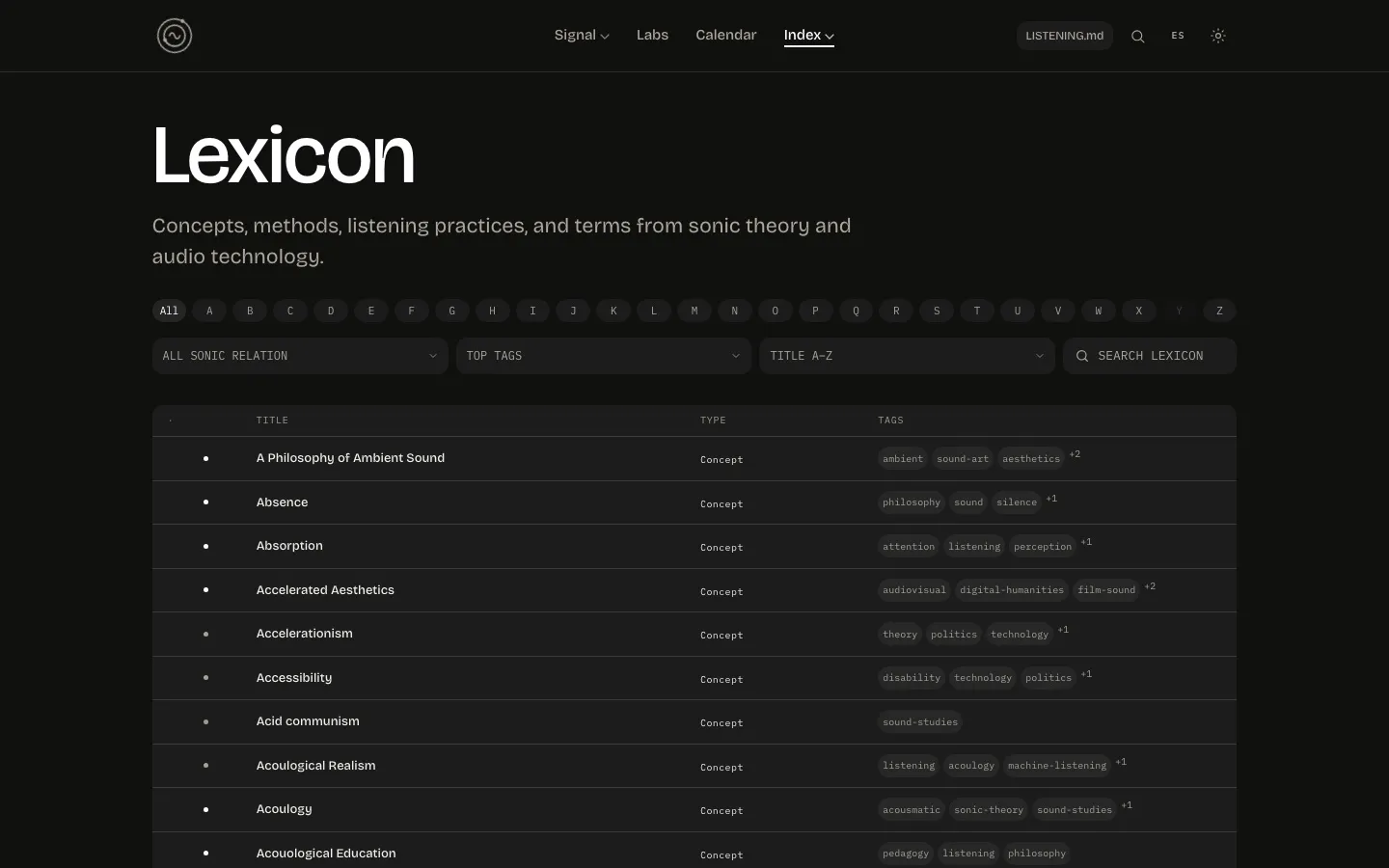
Editorial work now draws on a local research corpus. SonicBrain, a wiki of concepts, people and sources kept on local machines, holds the comparisons and research summaries that stay private, while the public Lexicon links only to verified original articles. Agentic workflows built on that corpus help draft and check records, and each record keeps its sources and its editorial review attached.
Labs
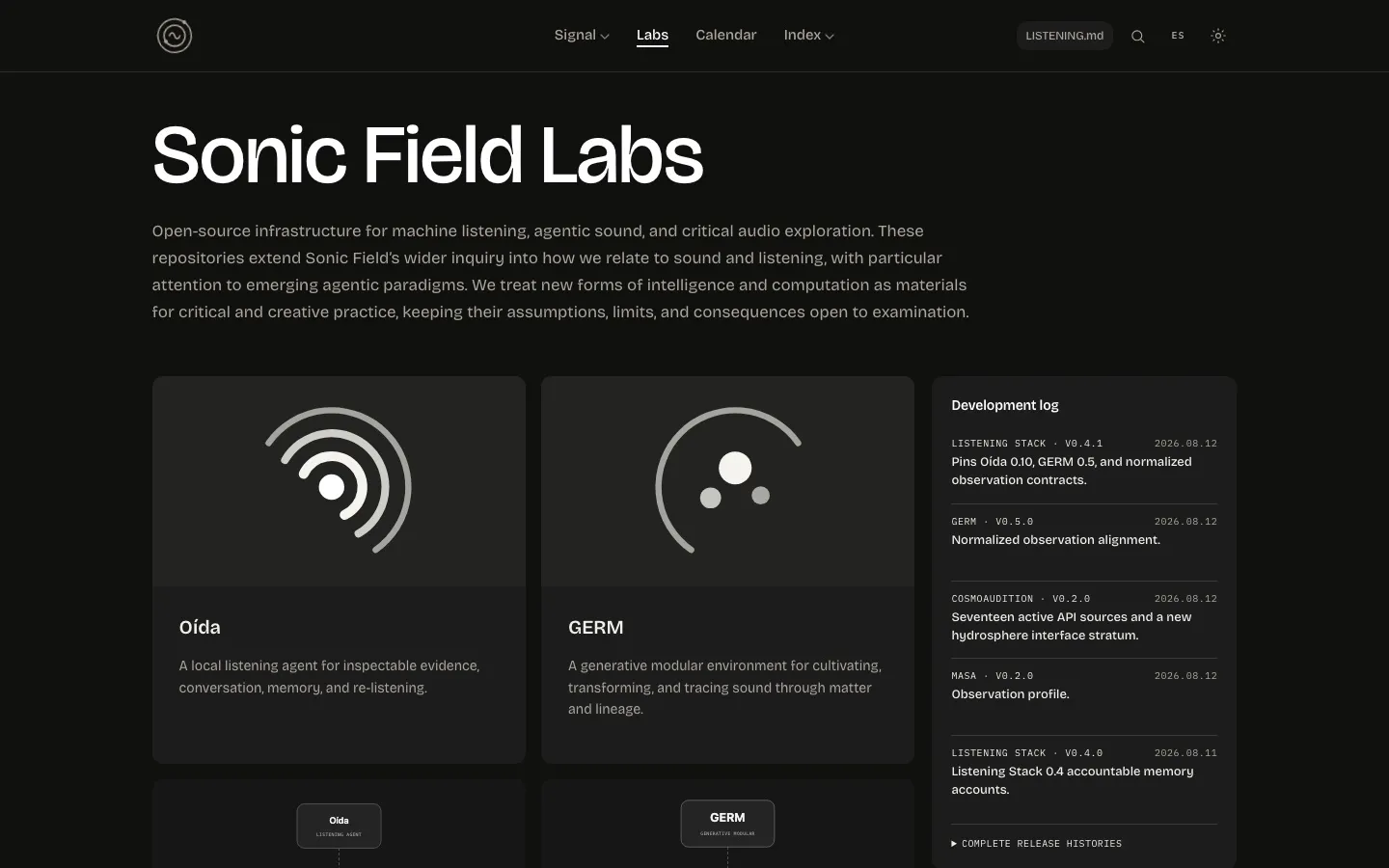
Sonic Field Labs presents itself as open-source infrastructure for machine listening, agentic sound and critical audio exploration. It works as a research community and a center of practice. Built projects are documented under Development and publications gather under Research. Commissioned holds work made with and for others, such as Área de Escucha, a situated process of recording and listening developed for the Museo de Arte Moderno de Medellín (MAMM).
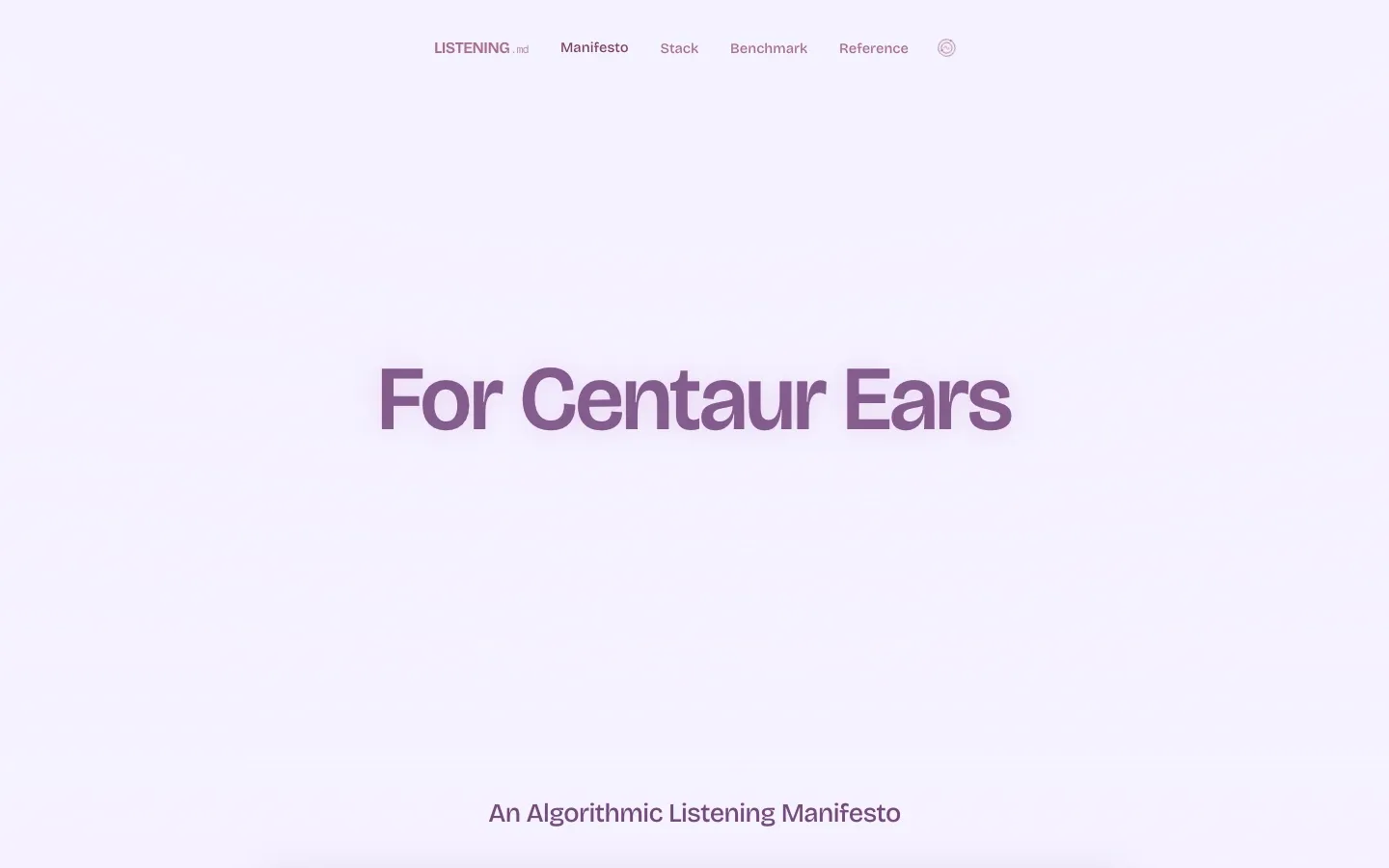
LISTENING.md, published in July 2026, is the research program of the Labs on algorithmic listening. It pairs the manifesto For Centaur Ears with the means to test it: an open agentic listening stack, a living vocabulary, and AuditumSWE, a benchmark for audio-language models that is still in development.
Built systems
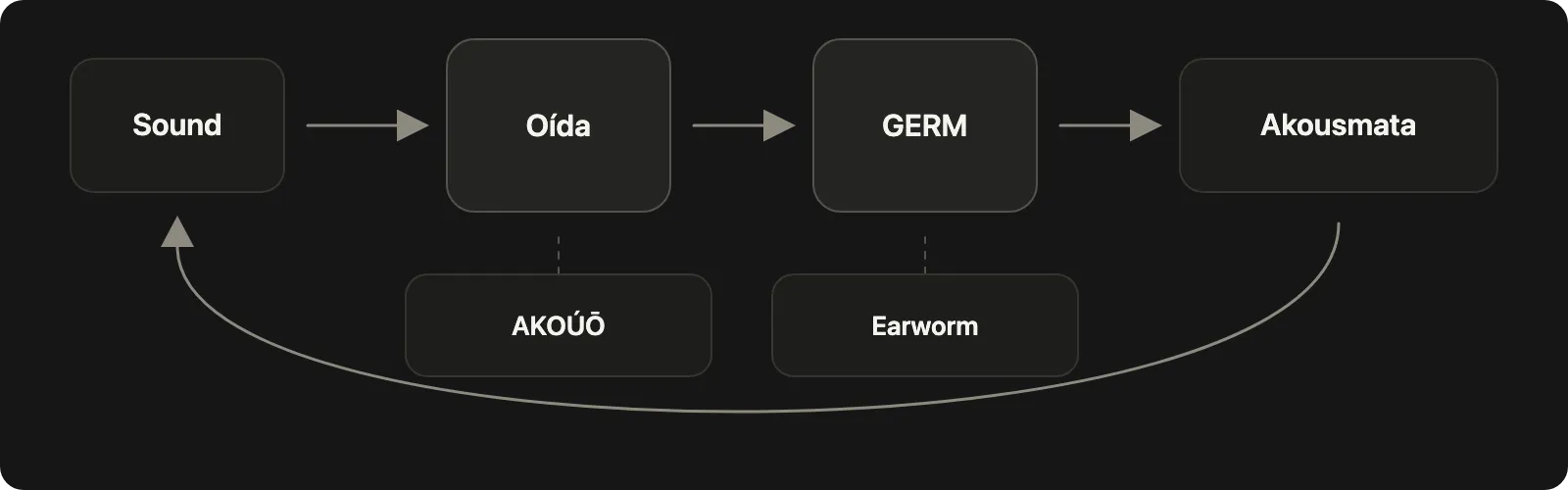
The Listening Stack shows how that infrastructure is put together. Oída is a local listening agent that keeps inspectable evidence of what it heard. GERM cultivates and transforms sound while tracing its lineage through matter, and Akousmata navigates the resulting sonic memory, with provenance and accountable forgetting built in. AKOÚŌ, a multimodal listening system for agentic workflows, and Earworm, a protocol that carries listening events and their provenance between applications, support the loop.
Other Labs projects carry the same questions elsewhere. ORAM is a local-first instrument for recording, looping and transforming layered sound. Algophony is an open framework for studying how algorithms generate soundscapes and listen to them.
Version 3
Version 3, launched in October 2026, reorganizes the site around its writing, indexes and Labs. The homepage sets current Journal writing beside a dated log of additions to the indexes. The Library and the Lexicon stay distinct kinds of source, each linked to the Tools catalog and to the writing that uses it. Collections and People record relations between works and the people who make them; the STEIM Archives collection, for instance, makes 631 recordings searchable with their participants and sources.
The site is open to agents as well as readers. A public API serves selected records as structured data, pages are available in Markdown, and a contributor skill helps prepare sourced proposals. Accounts and a site agent open gradually. The software is developed by aleph::ch’ixi with Sonic Field.
Earlier versions ran on WordPress under a waveform wordmark, with section names that shifted as the archive grew. In 2016 the menu read Data, Field, Art, Links, Radio and Books; by 2020 it had become Arts, Studies, Data, Radio, Terrain and Bookshelf, with a Spanish section.

